The Science Behind Using Thermal Remediation To Eliminate Bed Bugs

- Bed bugs have changed genetically to survive chemical sprays, but they cannot change their biology to survive high heat.
- Chemical sprays often miss eggs and require return visits, but heat penetrates walls and furniture to kill all life stages in a single day.
- Science proves that exposing bed bugs to temperatures above 120°F causes rapid drying and internal damage that guarantees elimination.
Bed bugs are some of the toughest survivors in the pest world. We thought we defeated them decades ago. Widespread use of strong pesticides in the mid-20th century caused their numbers to drop significantly. Many people thought bed bugs were just part of a nursery rhyme. But in the last twenty years, they have returned. They now infest hotels, houses, and apartments everywhere.
This return is not just about more travel or crowded cities. The main reason is biological. Bed bugs are changing. They are getting tougher and more resistant to the chemicals we use against them.
This reality has forced pest control experts to look at physics instead of chemistry. Thermal remediation, also known as heat treatment, is now one of the best options for bad infestations. It works because it attacks a physical weakness that evolution cannot fix. This article explains why bed bugs survive chemicals and the science behind why heat works every time.
Why Chemicals Are Failing
To understand why heat is necessary, you first have to understand why sprays often fail. For years, the main method of control involved pyrethroids. These are synthetic chemical insecticides. They used to work very well. They attacked the nervous system of the bug and caused paralysis.
However, repeated exposure led to selection pressure. The few bugs that survived these treatments passed their resistant genes down to their offspring. Today, we are dealing with a population of superbugs. They have a genetic mutation called knockdown resistance.
Research in medical entomology shows how common this resistance is. In many cases, bed bugs now have thicker skin that stops poisons from getting in. They also produce enzymes that clean the poison out of their bodies before it hurts them. When a homeowner sprays a standard insecticide, they might kill the weak bugs, but they often just annoy the strong ones.
Chemicals also have a major blind spot, which is the eggs. Bed bug eggs have a coating that protects them from liquid pesticides. You might manage to kill every crawling adult in a room, but the eggs hidden in the mattress seams or behind the baseboards will hatch ten days later. This restarts the problem. This is why chemical treatments almost always require three or four visits over several weeks.
Why This Matters to You
The failure of chemical treatments is not just frustrating. It has real consequences for your health and stress levels. A bed bug infestation is rarely a one-time event when handled poorly. It becomes a long-term problem in the home.
Families often get stuck in a loop of spraying, waiting, seeing new bites, and spraying again. This long exposure to stress can lead to anxiety and lack of sleep. You stop feeling safe in your own bed. Every itch makes you panic.
There is also the safety aspect to consider. To fight resistant bugs, people are tempted to use stronger chemicals or apply them more often than they should. This adds more toxins to your home. This is bad for households with pets, children, or elderly people with breathing issues. Heat treatment removes this risk entirely because it uses clean and dry air to kill the bugs.
The Physics of Thermal Remediation
Thermal remediation relies on a simple biological fact. Proteins break down when they get too hot. Every living thing has a maximum temperature it can survive. Once it goes past that point, its cells break down.
The Thermal Death Point
The margin for survival for bed bugs is small. Studies from universities and pest researchers show that the thermal death point for an adult bed bug is low. Adults begin to die quickly when their body temperature reaches 113°F. At 118°F, death happens within minutes.
Eggs are a little tougher. They act like bunkers for the developing bugs. To ensure the destruction of eggs, the temperature needs to sit at roughly 118°F for at least 90 minutes. If the temperature hits 122°F, the eggs die instantly.
Professional heat treatment aims for higher numbers than these minimums. This accounts for cool spots and insulation. A professional setup targets a room temperature between 135°F and 145°F. This creates a zone that is hot enough to push heat deep into furniture and walls. It is also safe enough to avoid damaging your home or electronics.
Drying Out and Breakdown
When the temperature in the room rises, two things happen inside the bed bug.
First is desiccation. This means drying out. Bed bugs have a waxy coating on their shell that helps them keep water inside. High heat melts this waxy layer. The bug loses its internal water very fast. They essentially dry out completely.
Second is enzyme breakdown. The proteins and enzymes that control the body of the bug lose their shape. Think of an egg frying in a pan. The clear liquid turns white and solid. That change is permanent. You cannot un-fry an egg. Once the proteins inside a bed bug break down due to high heat, the damage is permanent. There is no recovery. Unlike chemical resistance, there is no gene they can grow to stop their proteins from cooking.
Convection: Moving the Heat
You might wonder why you cannot just turn up your home thermostat or use space heaters. The science of success is not just about making heat. It is about moving heat.
Bed bugs are good at hiding. If a room starts getting warm, they will move to the coolest areas. They go deep inside a mattress, behind a wall outlet, or under the floor. Air does not move heat very well on its own. A pocket of hot air that sits still will not reach these hiding spots.
This is where industrial convection helps. Professional treatment uses high-speed fans to move the heated air around the room. This creates a convection oven effect. The moving air forces heat into every crack and crevice. It ensures that the temperature inside the wall is just as deadly as the temperature in the center of the room. It removes the cool zones where bugs could survive.
What Happens During Treatment
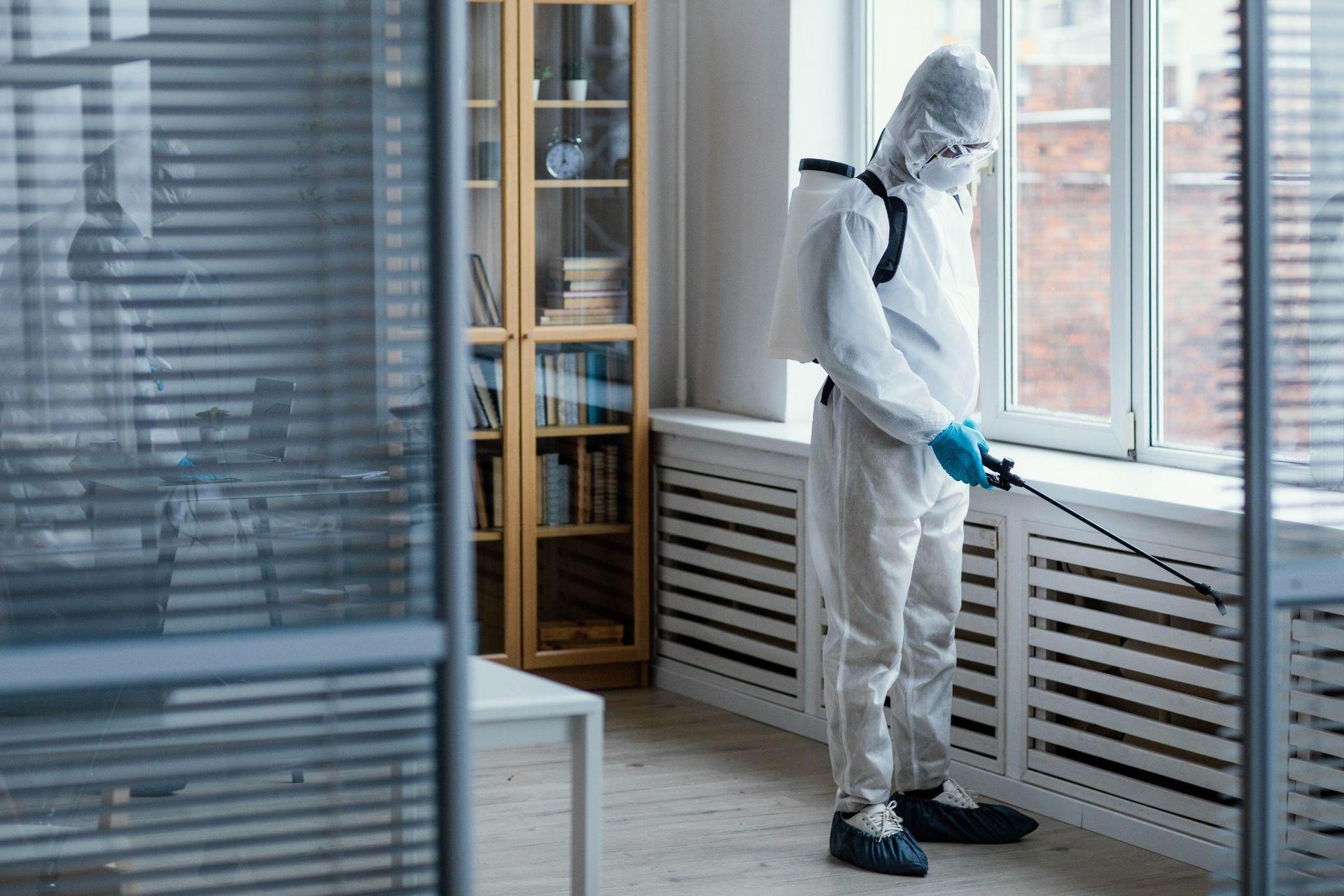
The process starts with preparation. It is not the difficult preparation required for chemicals, where you pack everything up. Since heat penetrates, you do not need to bag all your clothes or empty every drawer. The goal is to allow airflow. The technicians will place large heaters and fans in specific spots throughout the home.
Sensors are the most important part. A professional will not just guess that the room is hot enough. They place wireless heat sensors in the hardest areas to reach. They put them inside the thickest part of the mattress, in the bottom of a closet, and near the floor. The system is monitored from outside. The heating continues until every single sensor shows the kill temperature for the required time. This data ensures that there is no guessing.
Once the kill temperature is reached, it is held there for several hours. This hold time is vital. It ensures that the heat moves through materials that might block it. Things like thick wood bed frames or stacks of books need time to heat up. By the time the equipment is turned off, the heat has reached every inch of the space.
Common Misconceptions About Heat
There is a dangerous trend of DIY heat treatment that often leads to problems. We have seen homeowners try to use propane heaters, kerosene heaters, or even their kitchen ovens to kill bed bugs.
Do not attempt this.
Propane heaters release carbon monoxide and moisture. The moisture can actually protect the bugs. Carbon monoxide is deadly to humans. Uncontrolled heat is also a huge fire risk. Professional equipment is electric and controlled by a thermostat. It is designed to shut off automatically if temperatures get too high. This prevents damage to your home and belongings.
Another wrong idea is that heat damages the home. It is true that some items like candles, vinyl records, oil paintings, and cheap blinds need to be taken out. But the structural parts of a home are safe. Drywall, wiring, and pipes are perfectly safe at 140°F. Your attic likely gets hotter than that on a summer day.
The Role of the Professional
Thermal remediation is part science and part skill. An experienced technician knows how buildings breathe. They know where the cold spots will be in a split-level home versus an apartment. They know how to place the fans to create a flow of heat that scrubs the room of pests.
Finding the bottleneck of the infestation is crucial. Often, the bed bugs are not just in the bed. They are in the curtain rods, the screw holes of the nightstand, or the alarm clock. A professional uses the heat to pressurize the room. This ensures that even if a bug tries to run, there is nowhere cool to go.
If you are waking up to new bites and feeling the weight of an infestation, stop fighting a losing battle with store sprays. It is time to bring in the heat. Contact Green Heat NJ today for a consultation and let us use the power of science to eliminate your pest problem for good.